A thousand closure notes point to the same problem: the stamp tells you less than the note.
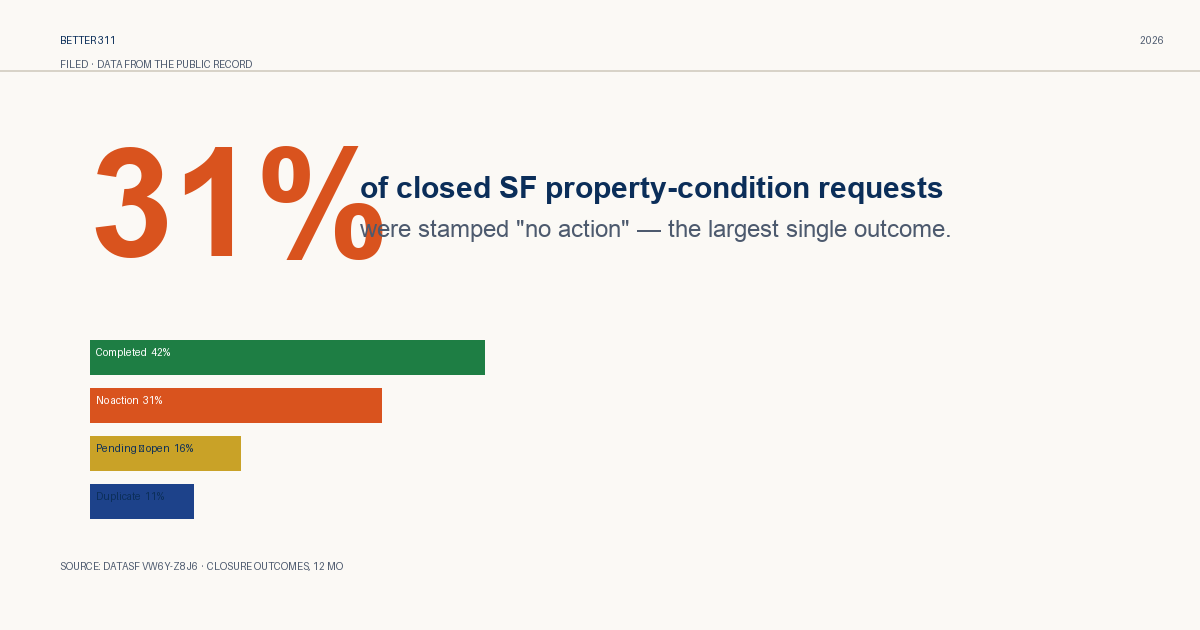
The status line is tidy. The sidewalk isn't. A recurring property-condition complaint can produce three entries in a city's record: one report, one closure, and another report when the problem stays put.
"Closed, no action" is the quietest status in the 311 system. It is also the one renters should learn first. In this sample, 31% of San Francisco property-condition requests that reached closure ended with no repair, inspection finding, or referral recorded in the result.
The city separates a completed case from one marked "no action required." The notes are where the distinction gets messy. Among the 1,000 sample notes, 214 use phrases such as "unable to locate," "no access," or "referred." None of those phrases tells a renter that the problem is gone.
For renters, that gap becomes part of the paper trail. A closure entry can show that the city handled a complaint without showing that anyone repaired the underlying condition. Those are different facts. A lease renewal is a bad time to discover the difference.
The rent board petition file adds context. Petitions that cite repair conditions rose 18% in the same sample window. Complaints did not get louder because buildings got better.
Keep the case number when you file. Check the note when the case closes, not just the status. If the problem remains, file again with the old number, the date, and a photo. Guárdalo. The paper trail is the part you can keep.
Five numbers, one chart, one story like this, every Monday at 7 AM. Free forever.